
Beyond Disposal: Rethinking Healthcare Waste Management for a Future
Healthcare is built around protecting life and improving well-being. But behind every consultation, diagnostic procedure, treatment and surgical intervention is another critical responsibility: managing the waste generated by healthcare activities safely and scientifically.
Biomedical waste is fundamentally different from conventional municipal waste. It can include infectious materials, contaminated plastics, sharps, pharmaceutical waste, laboratory waste and other materials that require defined segregation, handling, transportation, treatment and disposal pathways. When these processes are fragmented or poorly managed, the consequences extend beyond the healthcare facility to workers, communities and the environment.
This is why healthcare waste management needs to move beyond being viewed simply as a disposal activity.
Today, it is increasingly an integrated environmental management function, connecting public health, worker safety, regulatory compliance, operational efficiency, traceability and sustainability.
The Waste Journey Begins Inside the Healthcare Facility
Effective biomedical waste management starts long before a vehicle arrives to collect the waste.
The quality of the entire downstream process depends heavily on what happens at the point of generation.
Correct segregation helps ensure that different categories of waste enter the appropriate treatment pathway. It can prevent potentially hazardous or infectious waste from being mixed with general waste and reduce unnecessary treatment of materials that do not require specialised handling.
Healthcare establishments therefore need systems that bring together segregation protocols, appropriate containers, trained personnel, collection schedules, documentation and awareness.
This makes waste management a shared operational responsibility across the healthcare ecosystem rather than an activity confined to housekeeping or facility management teams.
Building a Reliable Chain of Custody
Once biomedical waste leaves the healthcare establishment, maintaining control over its movement becomes critical.
Collection, transportation and treatment should function as a connected system.
Dedicated transportation networks, defined collection processes and technology-enabled tracking can create greater visibility across the waste journey. Digital systems can support traceability from collection through transportation and ultimately to treatment and disposal.
For healthcare institutions, this visibility is increasingly valuable.
It provides greater confidence that waste generated within their facilities has moved through the intended management pathway and helps strengthen documentation, accountability and compliance management.
The future of healthcare waste management will increasingly be defined not only by how waste is treated, but also by how clearly its journey can be demonstrated.
Scientific Treatment Matters
Different biomedical waste streams require different treatment approaches.
The objective is not simply to eliminate waste from the healthcare facility. It is to ensure that each waste category is handled through an appropriate and scientifically managed pathway.
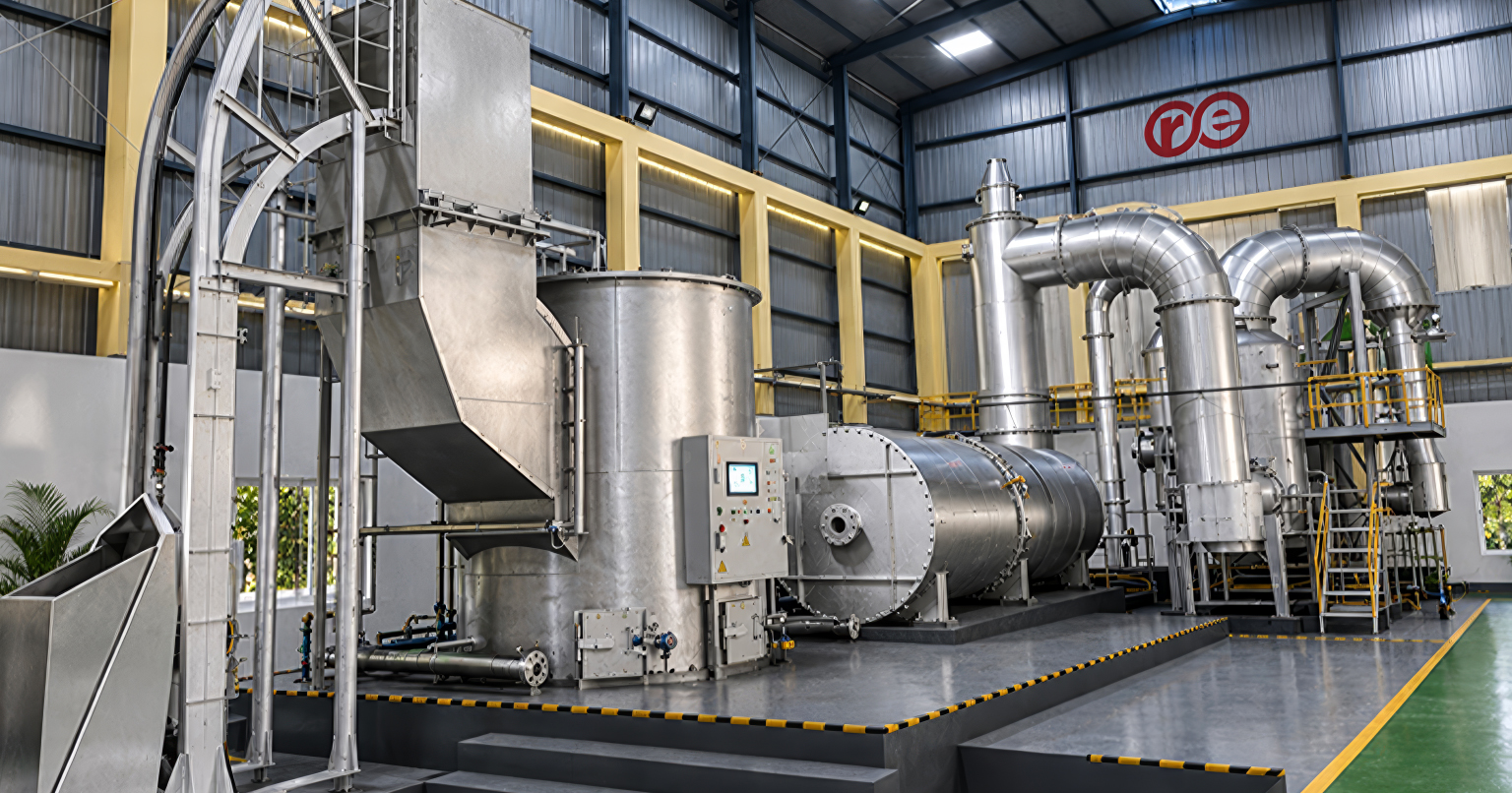
Treatment infrastructure, trained operating teams, standard operating procedures and environmental controls therefore become essential components of a robust healthcare waste management system.
At scale, specialised common biomedical waste treatment infrastructure also enables healthcare establishments to access professional waste management capability without independently developing complex treatment facilities.
This creates an ecosystem where healthcare providers can focus on healthcare delivery while specialised environmental service providers manage the downstream waste lifecycle.
Technology Is Changing Healthcare Waste Management
Digitalisation is creating opportunities to improve visibility and control across environmental services.
GPS-enabled transportation, digital collection records, operational dashboards, traceability systems and data-led reporting can help transform biomedical waste management from a largely transactional activity into a measurable environmental process.
For large hospitals and healthcare networks, this can provide useful insights into waste generation patterns, collection performance, documentation and operational trends.
Over time, better data can also support better decision-making.
Healthcare organisations can identify areas where segregation needs improvement, understand changes in waste generation and incorporate environmental performance more effectively into institutional sustainability programmes.
From Compliance to ESG Performance
Healthcare organisations are increasingly expected to consider their broader environmental and social footprint.
Waste management sits directly within this conversation.
How waste is segregated, handled, transported and treated has implications for environmental protection, occupational safety, community health and institutional governance.
A well-managed biomedical waste system can therefore contribute to multiple ESG priorities.
Environmentally, it supports appropriate treatment and prevents uncontrolled disposal. Socially, it can reduce exposure risks for healthcare workers, waste handlers and communities. From a governance perspective, traceability, documentation and defined processes strengthen accountability.
This is an important shift.
Biomedical waste management should not sit outside an organisation’s sustainability strategy. It should form part of it.
The Role of Scale and Expertise
Healthcare waste management becomes increasingly complex as networks expand.
Hospitals, clinics, laboratories, diagnostic centres, blood banks, research facilities, pharmaceutical operations and other healthcare establishments can generate different waste profiles and volumes.
Managing these streams consistently requires more than transportation and treatment capacity. It requires trained teams, infrastructure, process discipline, technology, environmental expertise and the ability to operate reliably every day.
Re’s Healthcare Services bring these capabilities together through an integrated approach to biomedical waste management.
With more than three decades of environmental experience, Re combines collection networks, dedicated transportation, treatment infrastructure, trained operational teams and digital capabilities to manage healthcare waste across its lifecycle.
The emphasis is on creating a system in which each stage connects with the next, from segregation and collection through transportation, treatment and final disposal.
Building the Next Generation of Healthcare Waste Systems
As India’s healthcare ecosystem continues to expand, the supporting environmental infrastructure must evolve alongside it.
More healthcare facilities will mean greater waste volumes. More specialised healthcare will create increasingly complex waste streams. Greater digitalisation will raise expectations around traceability. And stronger sustainability commitments will require organisations to look beyond minimum compliance.
The next generation of healthcare waste management will therefore need to be integrated, technology-enabled, scientifically managed and performance-driven.
For healthcare providers, the opportunity is to treat waste management not simply as something that happens after healthcare is delivered, but as an integral part of delivering healthcare responsibly.
Because a sustainable healthcare system is defined not only by how it cares for patients, but also by how effectively it manages the environmental footprint created in delivering that care.
Related Articles